
The quality of compound feed begins with proper preparation of raw materials. Mechanical processing is not merely a change in the shape of the grain, but a strategic tool for managing its nutritional value. Optimal particle size increases feed digestibility, improves pellet quality, and directly impacts feed conversion. As an expert in selecting technological solutions, Quiplines helps implement these standards in your production. Using industrial solutions from CPM in our projects allows us to build a flexible line capable of efficiently processing any raw material: from coarse plant waste to high-energy grain crops.
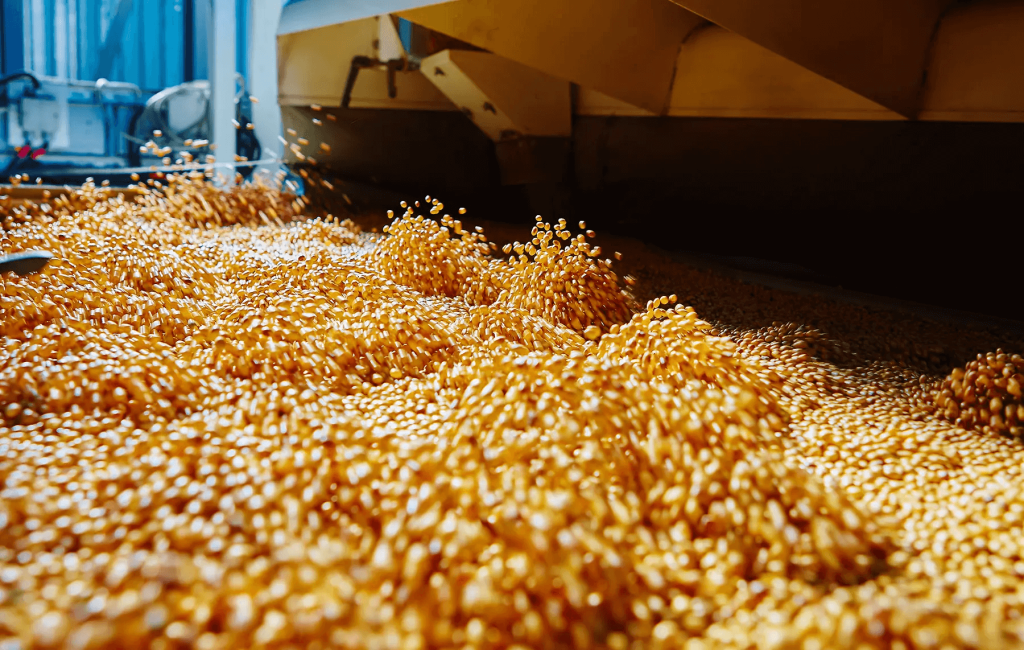
The efficiency of animal feeding depends largely on the physical structure of the feed, which determines the contact area between nutrients and digestive enzymes and microflora. Mechanical processing, particularly grinding and rolling, increases the digestibility of starch, proteins, and fats, optimizes digestion, and improves animal productivity.
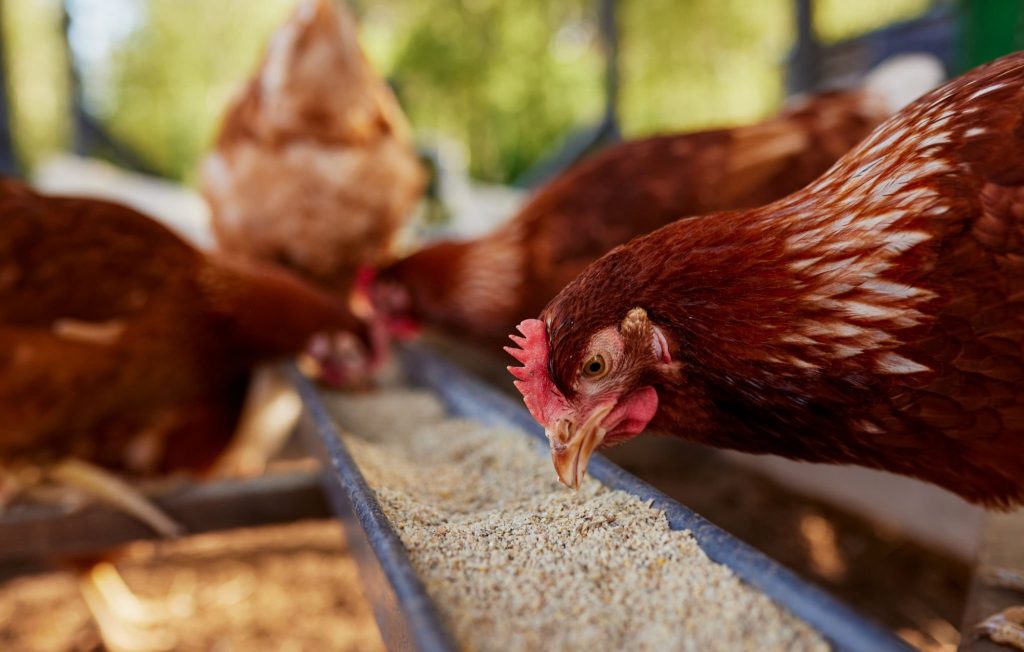
Poultry and Swine
For monogastric animals, a uniform grind of medium and fine fractions is important. This ensures rapid and complete nutrient absorption. An excessively fine grind can create dust, increase feed losses, and disrupt digestion; therefore, a balance between particle size and structural integrity is crucial.
Cattle
Ruminants require feed that stimulates rumen activity. Flaked grain ensures slow starch fermentation, supports chewing activity and salivation, prevents metabolic disorders, and increases nutrient absorption.
Aquaculture (fish)
For fish, ultra-fine grinding is used to produce dense pellets that are resistant to dissolution in water. This structure reduces feed loss, is adapted to the fish’s short digestive tract, and promotes complete nutrient absorption.
Thus, the correct choice of mechanical processing methods for raw materials increases the biological value of the feed and allows it to be adapted to the needs of different animal species, ensuring high feeding efficiency.
In modern compound feed production, the primary processing stage plays a critical role—converting heterogeneous, caked, or bulky raw materials into a flow suitable for precise dosing. Standard crushers often struggle with low-density materials, whereas CPM’s industrial shredder is specifically designed for “heavy-duty” primary processing.
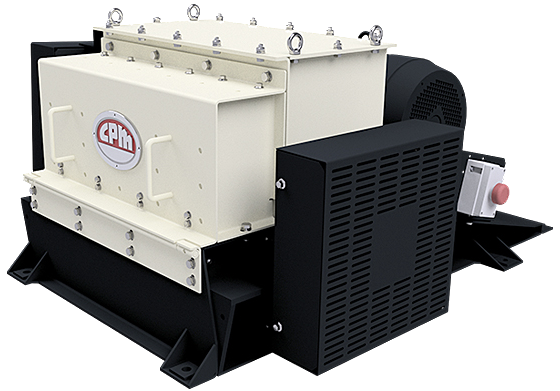
Removal of lumps and deagglomeration
One of the biggest problems at feed mills is the caking of raw materials (meal, bran, additives) during storage in silos.
– Agglomerate Disintegration: The shredder is ideal for “finishing” the processing of caked materials. It breaks up lumps and agglomerates, restoring the raw material’s original flowability.
– Preventing line blockages: Removing lumps at an early stage ensures that screw feeders and dosing units operate without interruptions, guaranteeing perfect recipe accuracy.
Processing benefits for the line
– Preparation for mixing: After the shredder, the raw material becomes homogeneous. This is critical for processes where coarse components must be evenly distributed throughout the bulk material without forming voids.
– Reduced load on the main crusher: Preliminary coarse grinding by the shredder allows the main hammer crusher to operate in a stable mode with higher productivity and less screen wear.
Result: You get a stable, lump-free raw material flow that is easy to transport, accurately dosed, and interacts as effectively as possible with other components of the compound feed.
CPM’s line of hammer mills is the result of decades of engineering improvements aimed at achieving maximum productivity with minimal energy consumption. Depending on production requirements and regional standards, the company offers the following key equipment series:
HM Series: The Universal Industrial Standard
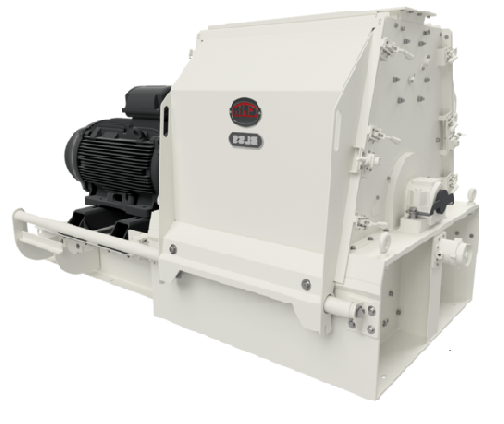
The HM Series is designed for the most demanding applications in animal feed, aquaculture, and ethanol production. It offers the best balance of performance and energy efficiency.
– Standard equipment: Premium diamond hammers, bearing temperature sensors, fully adjustable vibration safety switches, and replaceable AR235 wear-resistant liners as standard.
– Patented geometry: A unique grinding chamber shape and a special design for secondary grinding. This ensures that grain particles are instantly discharged through the screen as soon as they reach the desired size.
– Full access: The crushers are equipped with solid doors mounted on unique swivel brackets. They slide completely to the side, giving the operator unobstructed access to the entire width of the crusher.
– Technical excellence: Power range from 50 to 500 horsepower. High-density frames minimize noise and vibration, while dynamically balanced rotors ensure smooth operation for many years.
EMF Series: Efficiency and Innovation
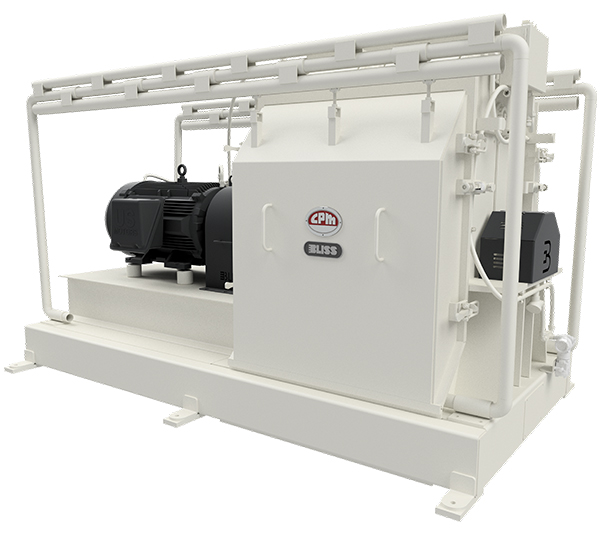
The EMF series is designed to meet strict European standards. It is ideal for integration into highly automated production lines with strict energy consumption controls.
– Flow Optimization: The EMF design provides an ideal balance between stroke speed and suction area, allowing for a uniform product with lower energy consumption.
– Quick Maintenance: The central-pivot carriage allows screens to be replaced in minutes without special tools.
– Safety: Features key locking and full integration of monitoring sensors into the control system.
ER Series – Exceptional reliability for heavy-duty applications
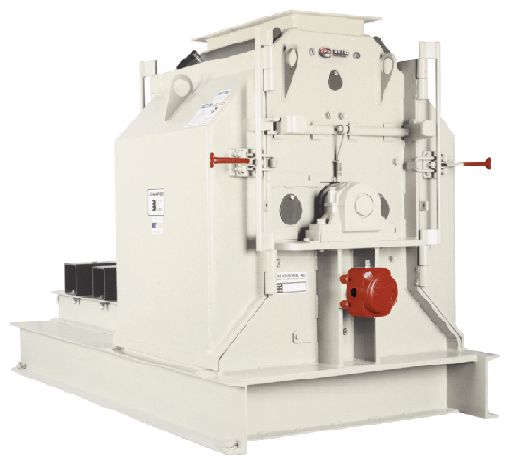
The ER Series is designed for operations where equipment runs at full capacity 24/7, processing the most challenging and abrasive raw materials.
– Ease of maintenance: The crusher features a full-access door, allowing the operator to quickly replace hammers and service internal components.
– Extreme durability: The housing and bearing assemblies are designed for maximum mechanical loads. This is the “heavy artillery” for processing oilseed meal, bran, and other heterogeneous raw materials.
– Minimal downtime: The combination of a reinforced rotor design and wear-resistant housing materials makes the ER series a leader in terms of maintenance cost per ton of product under harsh conditions.
The CPM 1200 and 1600 series industrial roller mills are designed for the precise grinding of grain and protein components in compound feed, ensuring a uniform particle size—which is critical for the even mixing, dosing, and pelleting of feed for various animal groups.
The mills effectively process corn, wheat, soybeans, and other grain and protein ingredients, allowing the degree of grinding to be adjusted according to the animals’ needs: a fine fraction for poultry and pigs, and a coarser one for ruminants. Adjustable rollers and rotation speed control ensure consistent particle size, which improves nutrient digestibility and increases feeding efficiency.
1600 Series
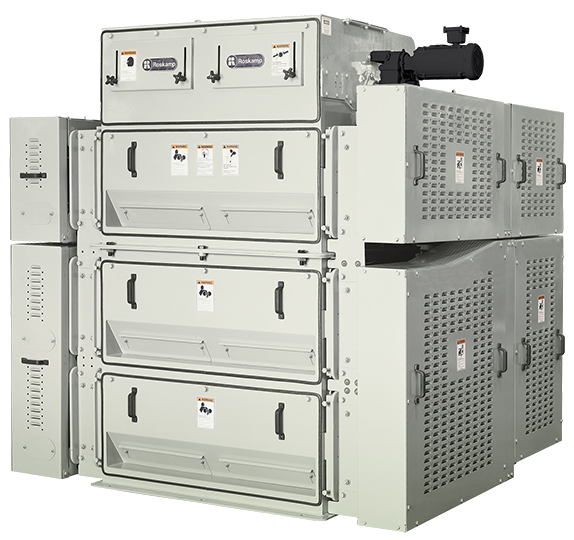
The 1600 Series roller mills are designed for the most demanding grinding applications. Corrugated rollers and variable speeds allow the mills to be adapted to different types of raw materials. The model is available in two-, four-, and six-roll configurations with a roll diameter of 16 inches and a power range from 50 to 300 horsepower. Unique bearing assembly guides ensure precise and stable production, and the mill’s design allows for integration into automated production lines, guaranteeing high productivity around the clock.
1200 Series
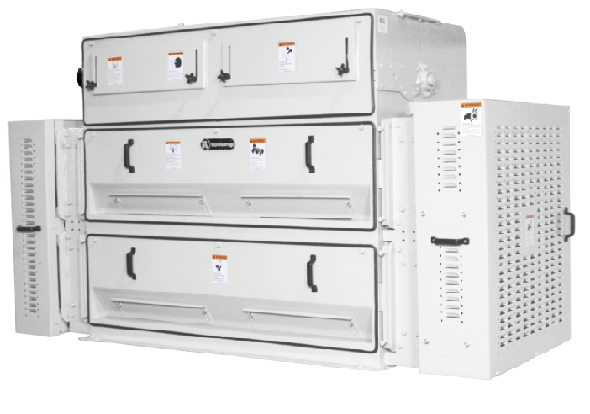
The 1200 Series roller crushers are also designed for demanding crushing applications. The corrugated rollers and differential speed ratios ensure consistent crushing quality. The model is available in two-, four-, and six-roll configurations with a roll diameter of 12 inches and a power range from 30 to 225 horsepower, making it a versatile solution for the feed industry.
The design of the 1200 and 1600 series mills ensures reliable operation with large volumes of raw materials, high grinding precision, as well as durability and ease of maintenance, making them ideal equipment for modern feed production lines.
When a manufacturing process requires not just grinding, but the production of fine flakes with a specific density and texture, CPM’s specialized FX series industrial flakers are used. This equipment is the industry standard for the production of high-energy cattle feed and the processing of oilseeds.
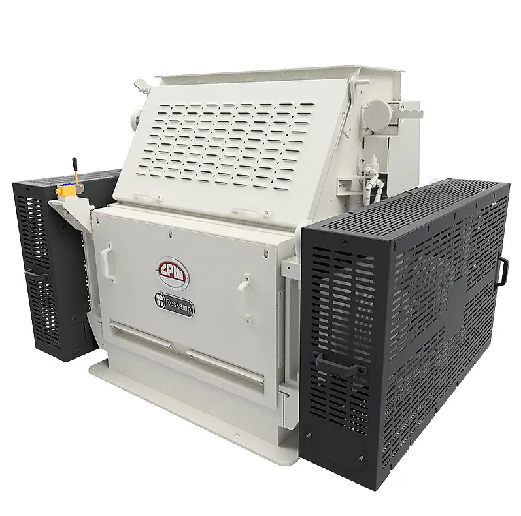
– Reliability and precision: The flakers are designed for continuous operation under the harshest industrial conditions. The heavy-duty steel housing and reinforced bearing assemblies ensure stable roller operation even under extreme hydraulic pressure.
– Hydraulic control system: The adjustment system allows the gap between the rolls to be set with precision. This ensures uniform flakes of consistent thickness across the entire working width, which is critical for subsequent heat treatment.
– Maximum service life: The rollers are made of a special wear-resistant alloy that can be reground multiple times, and the use of a single-drive motor ensures high efficiency, a long service life, and low operating costs per ton of product.
The use of professional flakers allows for achieving the maximum level of starch gelatinization in the grain. This not only increases the nutritional value of the feed but also creates an ideal structure that is best digested by animals.
CPM’s professional solutions are not merely mechanical components, but intelligent systems designed to minimize human error and the risk of breakdowns. To ensure durability and maximize the efficiency of the crushing section, the following solutions are implemented:
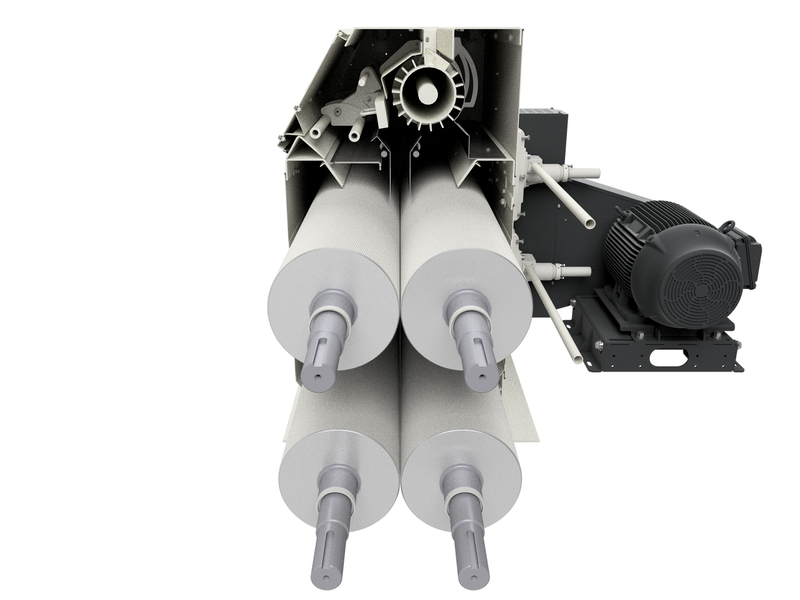
– Multi-level magnetic protection: The installation of high-efficiency magnetic separators and stone traps at the system inlet is mandatory. This is critical for 1200/1600 roller mills, where even a small metal object can damage the roller surface, and for HM series crushers, where foreign objects cause rotor imbalance.
– Roll Protection: The 1200/1600 series industrial mills feature a system that instantly separates the rolls if a foreign solid object enters, preventing critical damage to the expensive working surface.
– Intelligent feeding systems: Grinding efficiency depends 50% on the uniformity of the feed. The use of screw or pocket feeders with frequency control allows for maintaining maximum motor load without the risk of chamber clogging.
– Aspiration and temperature control: Fine grinding in the ER and HM series is accompanied by heat generation. Powerful aspiration systems not only cool the product, preserving heat-sensitive vitamins, but also create a vacuum that literally “pulls” the fine fraction through the screens, increasing productivity by 15–20%.
– Vibration and Bearing Condition Monitoring: Modern sensors allow for the detection of crusher rotor imbalance or roller bearing wear at early stages. This prevents emergency shutdowns and enables the planning of maintenance work in advance.
– Automatic gap adjustment: Integration with control systems allows the distance between the rollers or the rotor speed to be automatically adjusted based on the recipe, ensuring perfect consistency in feed quality from batch to batch.

A modern raw material processing line is a balanced combination of power and precision. The use of shredders for coarse materials, universal hammer mills of the HM, ER, and EMF series for main ingredients (including micro-ground feed for aquaculture), and roller mills of the 1200/1600 series for grinding enables the creation of a production process of the highest standard. CPM solutions provide process flexibility, reliability, and consistently low energy consumption. By choosing this equipment, the manufacturer invests not only in the machinery but also in the consistent quality of the finished product, which is a key factor in profitability in modern agribusiness.
Looking to modernize your grinding section and improve feed quality?
If you aim to achieve the ideal particle size distribution, reduce energy costs per ton of product, and ensure uninterrupted 24/7 operation of your equipment, Quiplines will be your reliable partner in implementing CPM’s cutting-edge technologies.
We offer comprehensive solutions for your success:
– Comprehensive support: Full management of the ordering and delivery process for equipment and components directly from the manufacturer.
– Professional selection of grinding systems: Analysis of your raw material base and selection of optimal models—from versatile hammer mills to high-precision roller mills.
– Commissioning and Service: We perform commissioning work, provide professional start-up services, and train your staff. Quiplines LLC offers a full range of service support at every stage.
– Genuine spare parts: Selection and supply of certified components—hammers, rollers, and bearing assemblies—that guarantee maximum service life and consistent grinding quality.
Contact us today! Our specialists will help you select and order equipment that will give your compound feed production a competitive edge in the market. Follow our new projects on LinkedIn and Facebook.


