

Chain bucket elevators are well-suited for vertical conveying of heavy bulk, dusty, moist, and non-uniform materials typical for feed production. The equipment effectively handles grains (wheat, corn, barley), bran, protein meals (sunflower, soybean, rapeseed meal), oil cake, compound feed pellets, as well as ingredients that may contain mineral impurities or have increased abrasiveness.
Operating at reduced conveying speeds, the elevator ensures smooth and uniform product movement with minimal equipment wear. Discharge takes place under the material’s own weight, which provides stable conveying even for “difficult” products – moist materials, products prone to sticking, or materials with an uneven particle size distribution.
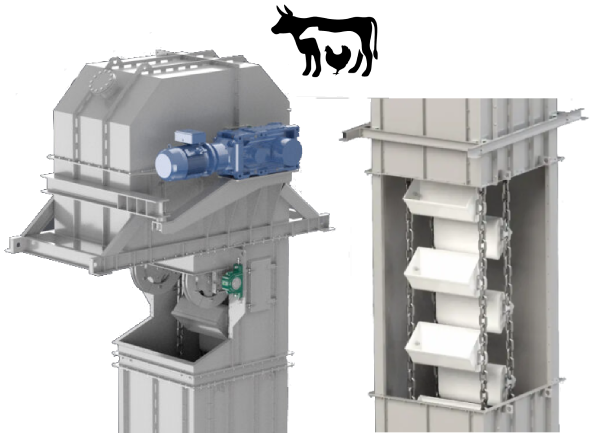

Chain bucket elevators are technically reliable systems that can be easily adapted to various operating conditions and material types. The elevators consist of several components that are crucial for efficient operation.
Buckets. Buckets are the main working element of the elevator. They are made of mild steel, stainless steel, or plastic. Plastic buckets are suitable for grain and light materials, while steel buckets are used for high temperatures and aggressive environments.
Drive. The buckets are driven by an elevator chain, which provides high strength and reliability when conveying heavy materials.
Tensioning system. Stable and smooth operation is ensured by a tensioning unit located in the lower part of the elevator, using either a threaded spindle or a gravity weight system.
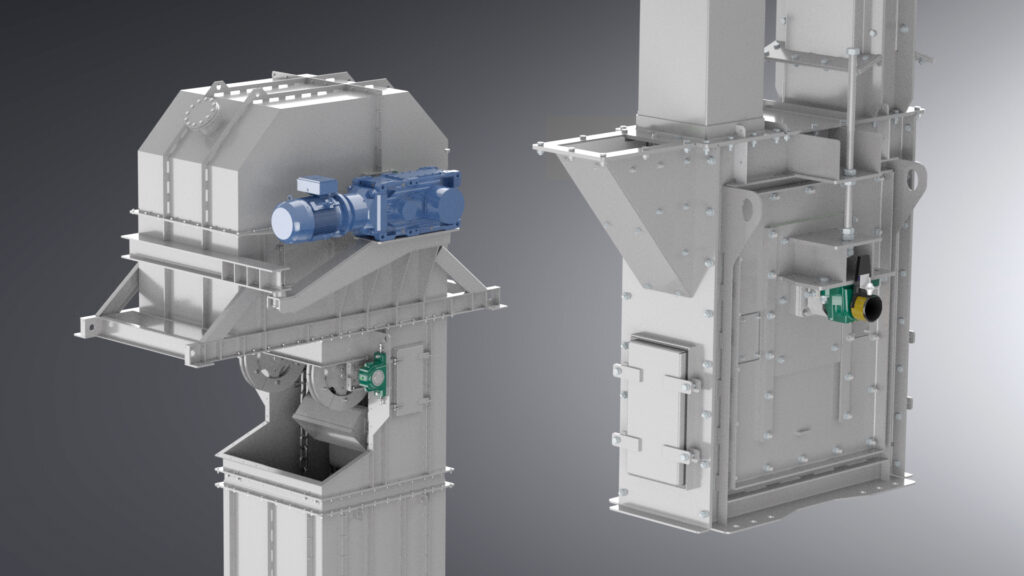
Due to their robust design, chain bucket elevators are intended for demanding operating conditions. They are suitable for conveying heavy bulk materials, products with high temperatures (above 100 °C), as well as aggressive or corrosive materials. These elevators ensure reliable operation at medium conveying heights and under increased mechanical loads.
Steel buckets in accordance with DIN 15234 are mounted to the rear wall and installed on two round-link chains, providing high strength and reliable performance when handling abrasive materials.
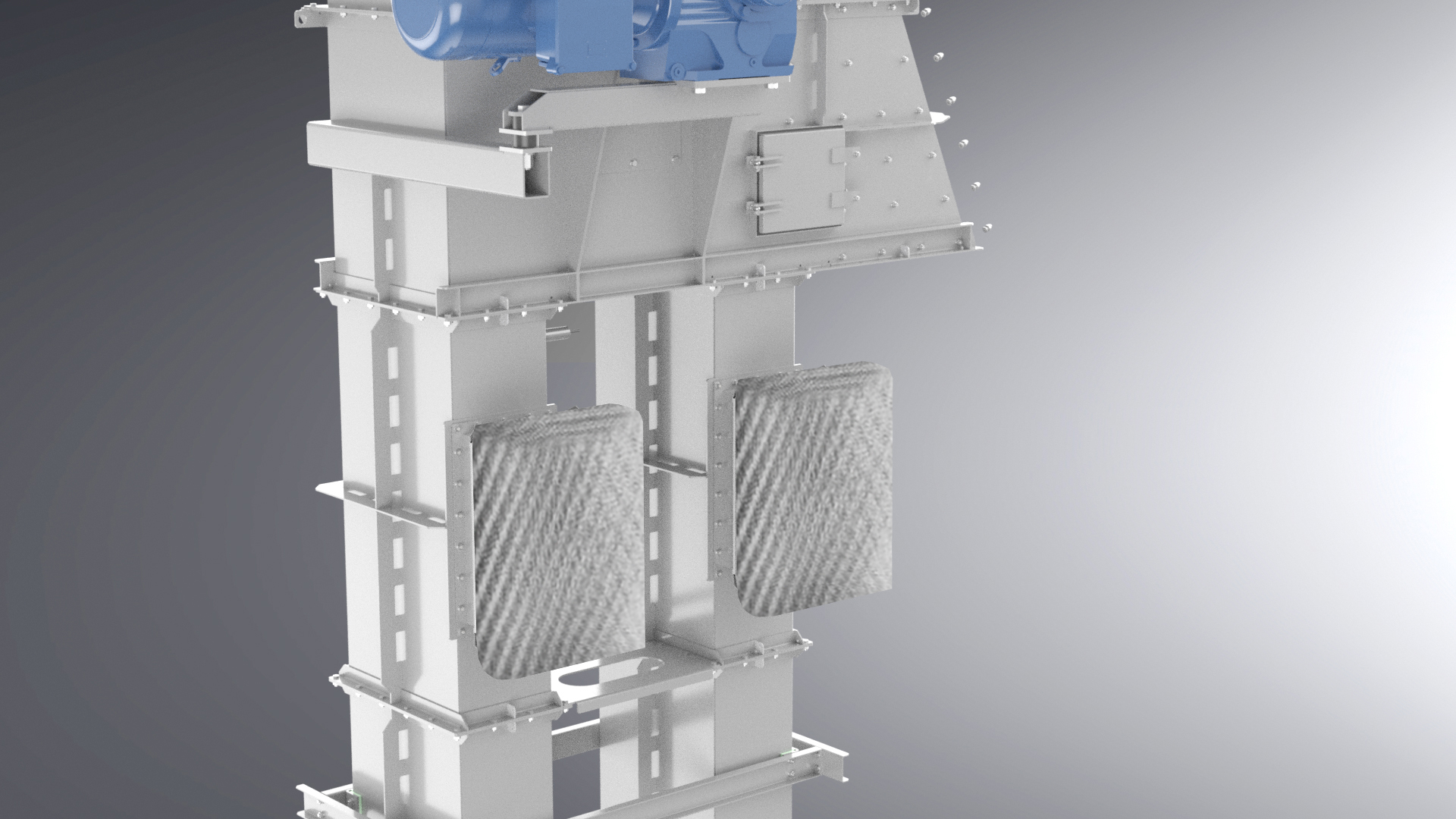
During loading and discharge of the bucket elevator, dust is generated, which may form a potentially explosive atmosphere (ATEX). The elevators can be equipped with explosion pressure relief devices selected according to the operating conditions. The reinforced housing is designed to withstand reduced explosion pressure, ensuring safe operation of the bucket elevator.
Other Design Options. Bucket elevators can be manufactured with positive gravity discharge, which ensures gentle material handling and reduces wear. For abrasive materials, buckets with hardened front edges are used, while buckets with ventilation holes are applied for powdery products. A round-bottom housing minimizes dead zones and improves the hygienic design of the equipment.
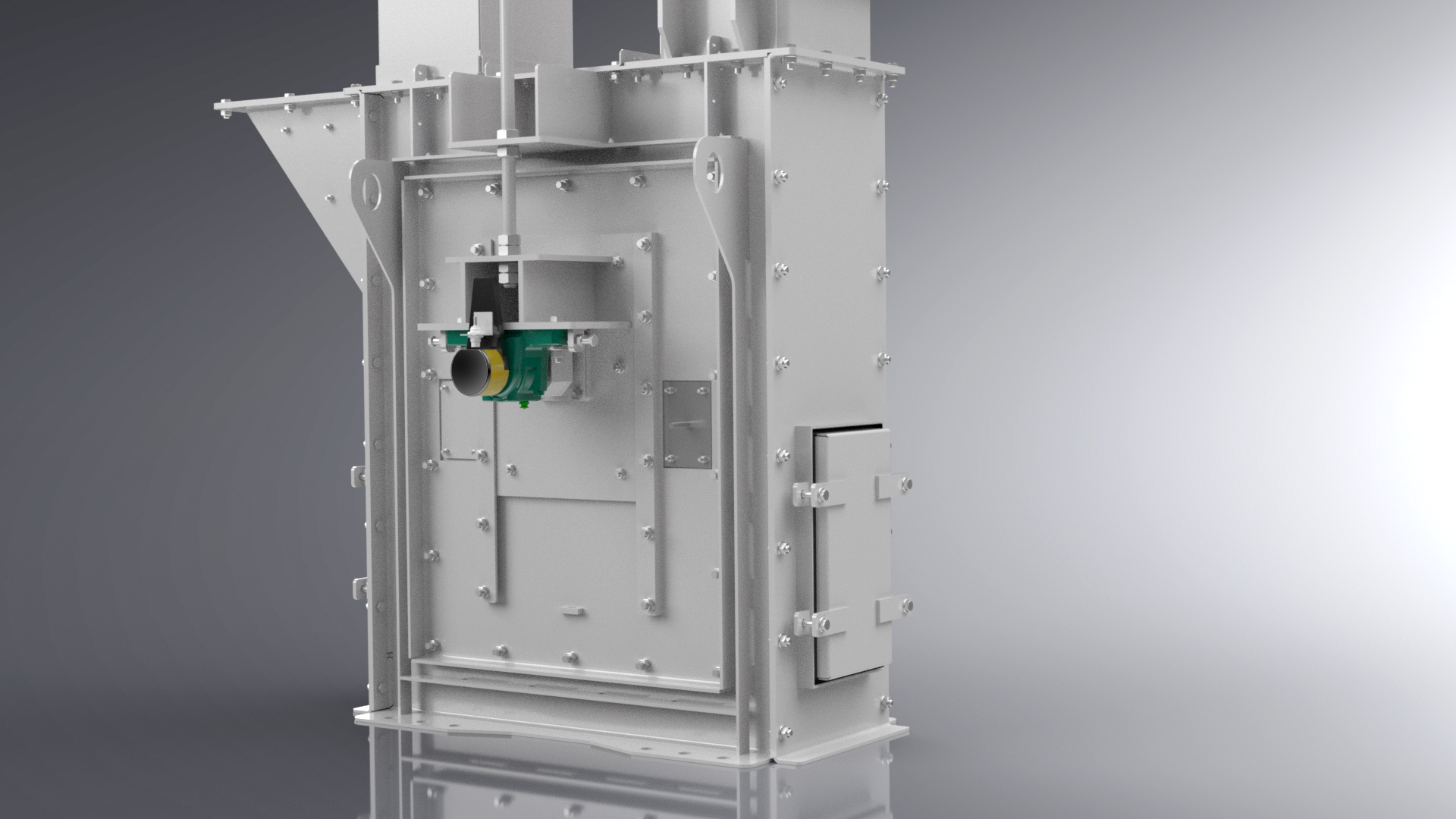
To increase operational reliability and safety, bucket elevators can be equipped with additional accessories. These include an accumulation flap with a sensor for overflow protection in the elevator boot, as well as a speed monitoring system on the drive shaft, allowing early detection of malfunctions and prevention of emergency situations.
Quiplines LLC is your reliable partner specializing in the supply of production equipment and spare parts, the provision of services, and technical support for enterprises at all stages of project implementation.
Learn more
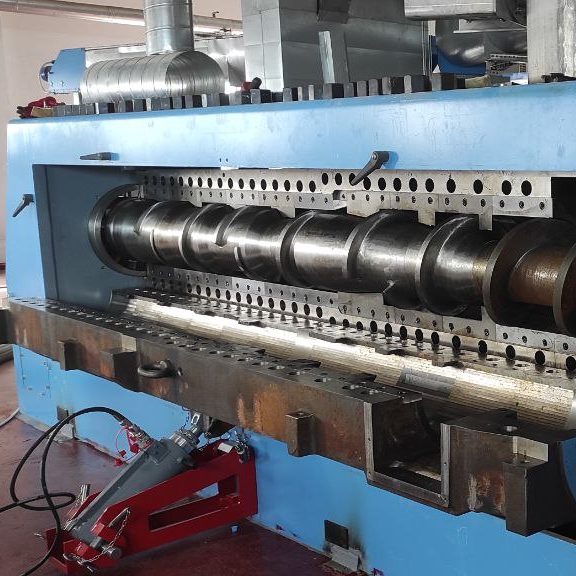

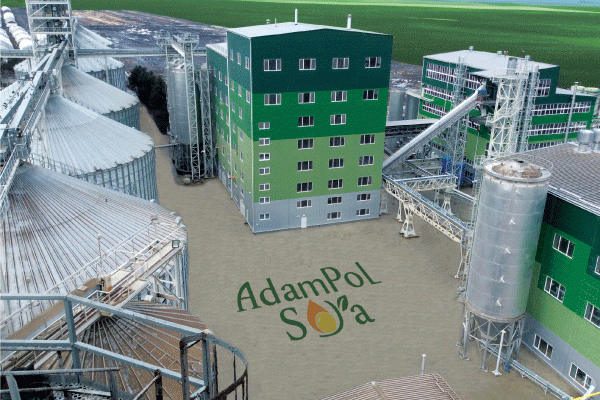
We implement full-cycle projects — from equipment selection to commissioning and further maintenance. Each of our projects is a confirmation of quality, professionalism, and an individual approach to the customer. We are proud of the trust our partners place in us and continue to contribute to the development of industry.



Quiplines LLC is your reliable partner specializing in the supply of production equipment and spare parts, the provision of services, and technical support for enterprises at all stages of project implementation.








News in the field of industry and equipment

In modern industry, equipment reliability is a key factor in ensuring stable profits and uninterrupted production. Maintaining screeners with OEM...
Learn more
JJ-Lurgi biodiesel technology is the result of decades of experience in the advanced processing of oils, fats, and oleochemicals. JJ-Lurgi...
Learn more
The quality of compound feed begins with proper preparation of raw materials. Mechanical processing is not merely a change in...
Learn more
Modern oilseed crushing and oil extraction operations demand maximum continuity. Any stoppage of core equipment is not only a technical...
Learn more
The modern oil and fat industry is characterized by the transition to full automation and maximum energy efficiency. The use...
Learn more
The chemical industry has extremely high requirements for the quality of raw materials and end products. One of the critical...
Learn more


 Download brochure